
UPNG AND MARIE STOPES PARTNERS TO PROVIDE SEXUAL AND MENTAL HEALTH PROGRAM FOR STUDENTS
BY RAYLEEN WANJIMAN
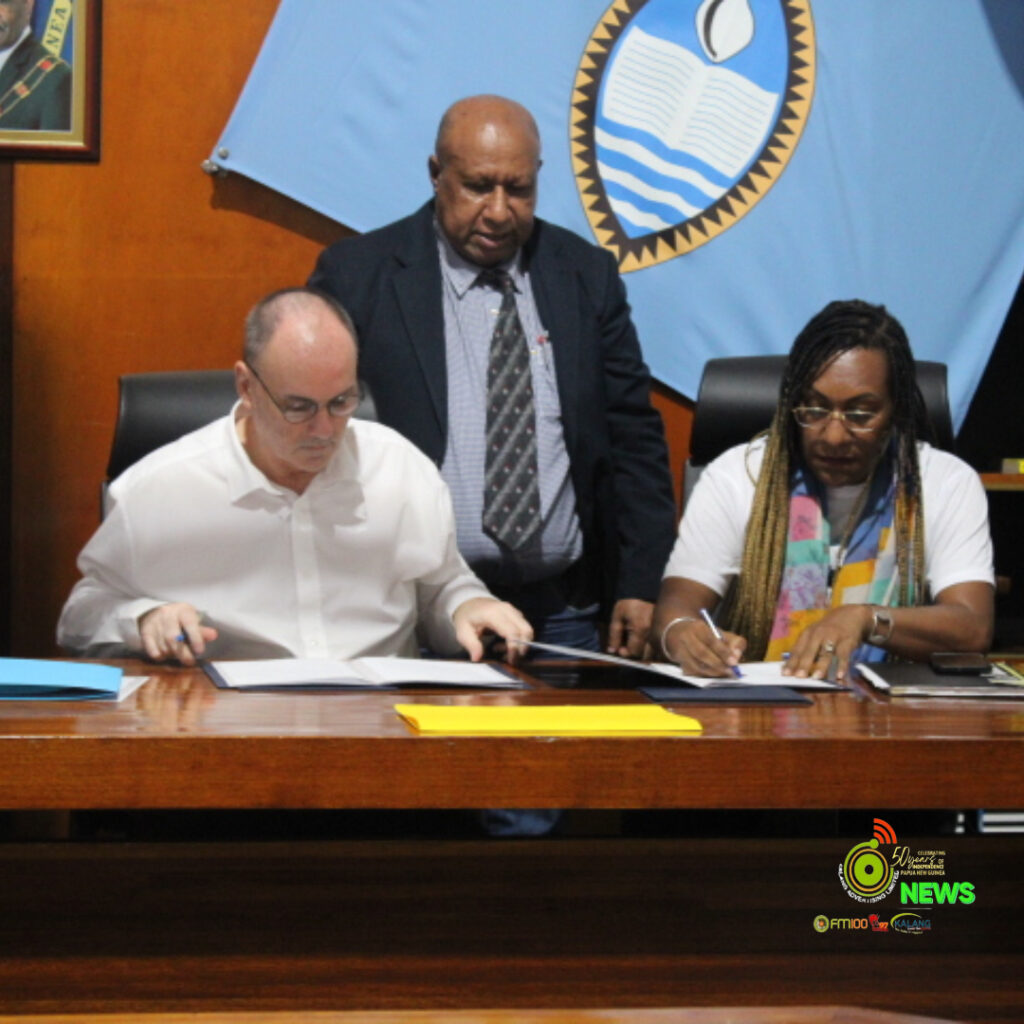
THE University of Papua New Guinea has signed a Memorandum of Understanding yesterday with Marie Stopes PNG to establish a comprehensive sexual and mental health program for students and staff at the university’s main campus.
The partnership, formalised at the UPNG Council Conference Room, aims to strengthen access to reproductive health services, education and counselling for the university community, helping students make informed and responsible decisions about their health and wellbeing.
Speaking during the signing ceremony, UPNG Vice-Chancellor Professor Ian Findlay described the initiative as a crucial step towards empowering young people particularly women through education and informed choices about their sexual and reproductive health.
“One of the best things we can do to address poverty is to empower women,” Professor Findlay said. “And giving women choices over reproduction is fundamental to their lives. What we are doing with this partnership is giving people access to information and facilities so they can make informed decisions.”
He emphasised that the partnership is not about promoting any particular lifestyle or forcing anyone to use contraception, but about creating an environment where students can access accurate health information without stigma or shame.
“We’re not forcing people to use contraception or to get tested for HIV or STIs,” he explained. “All we’re doing is making sure that if they want that information or support, it’s available. People can choose to use it or not. What matters is that they are informed.”
Professor Findlay also highlighted the importance of addressing myths and misinformation about sexual health that often led to unplanned pregnancies, sexually transmitted infections (STIs) and preventable health risks.
Under the new partnership, Marie Stopes PNG will collaborate with UPNG’s Health Services and Student Support Division to deliver awareness programs, counselling, medical services, and health education sessions throughout the academic year.
Professor Findlay concluded by reaffirming his commitment to student welfare and holistic education.