
BSP EXPANDS HIGHLANDS NETWORK WITH NEW MINJ BRANCH
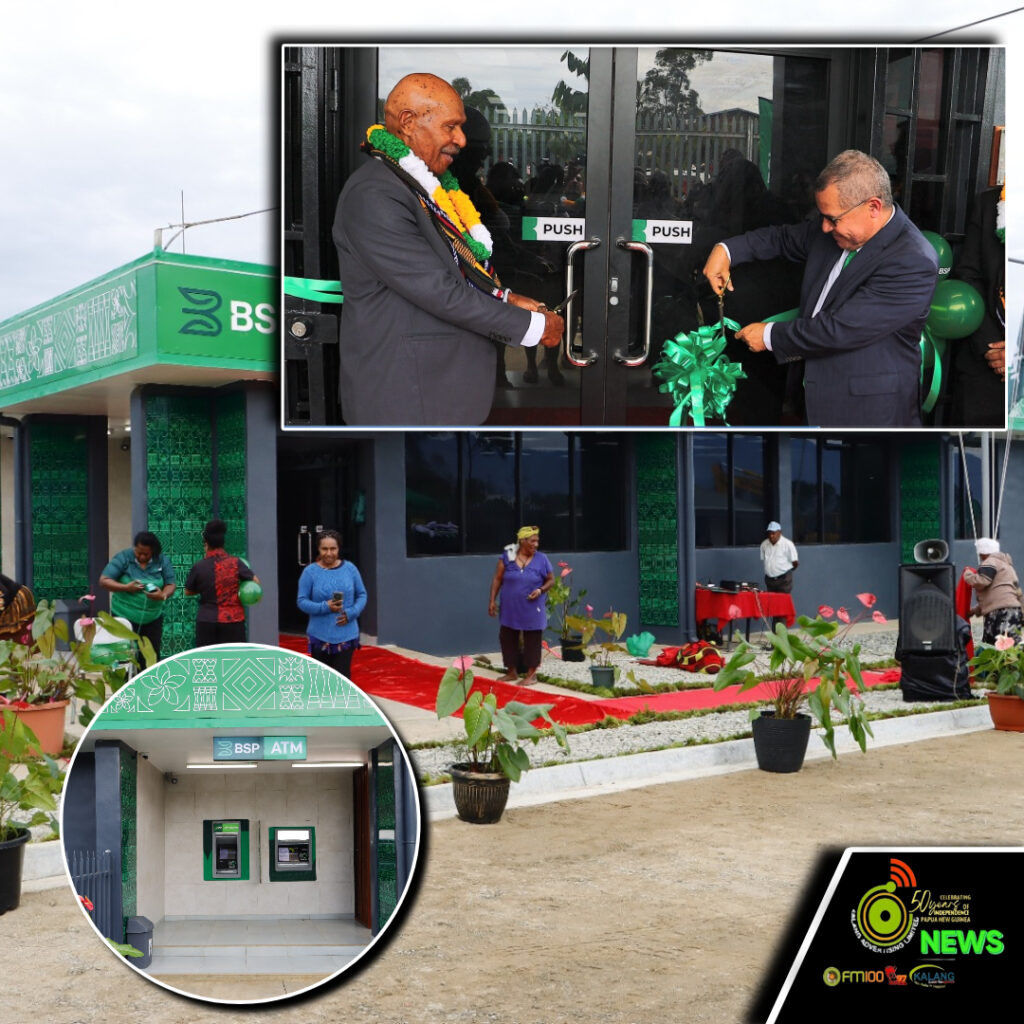
BSP Financial Group has officially opened a newly upgraded full-service branch in Minj as part of its K1.2 billion multi-year investment program to modernise banking services across Papua New Guinea.
The new branch marks a significant step in improving customer service and expanding access to banking in Jiwaka Province and the wider Highlands Region.
BSP Chairman Robert Bradshaw says the investment reflects the bank’s long-term commitment to building stronger communities and creating economic opportunities.
The Minj branch has been upgraded from a sub-branch and now offers a full range of services including teller services, ATMs and digital banking registration.
Meanwhile, General Manager Retail Ronesh Dayal says the development highlights BSP’s focus on meeting the growing needs of customers, bringing modern banking closer to rural populations.
Serving more than 200,000 people the branch is expected to support local farmers, small businesses and families while reducing the need to travel to Mount Hagen for essential banking services.
BSP says the expansion is part of its ongoing efforts to strengthen financial inclusion and deliver more accessible, efficient banking nationwide