PNG CORRUPTION SCORE OF 26/100 RAISES INVESTMENT CONCERNS
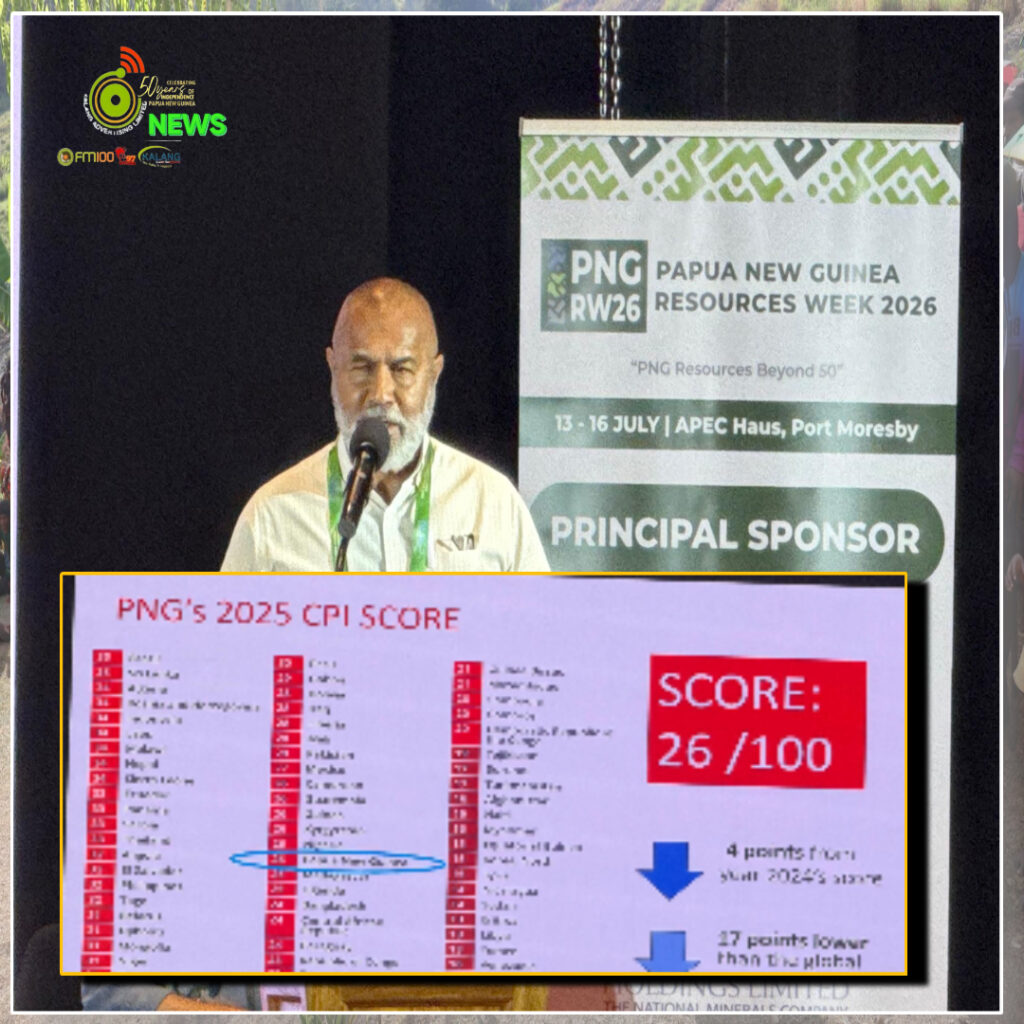
CAPTION: TRANSPARENCY International PNG Board Chairman Peter Aitsi speaking at PNG Resources Week 2026 at APEC Haus
BY RAYLEEN WANJMAN
TRANSPARENCY International PNG Board Chairman Peter Aitsi says Papua New Guinea’s corruption ranking should serve as a wake-up call for Papua New Guinea stressing that stronger governance and transparency are essential to attracting investment and building investor confidence.
Speaking during the Strengthening Transparency, Governance and Compliance to Build Trust and Investment Confidence session on day three of PNG Resources Week 2026 at APEC Haus today, Aitsi said PNG scored 26 out of 100 in the 2025 Corruption Perceptions Index (CPI)reflecting ongoing governance challenges.
He emphasized that international investors look beyond a country’s natural resources and increasingly consider governance indicators such as the Corruption Perceptions Index, the Extractive Industries Transparency Initiative and Financial Action Task Force assessments when deciding where to invest.
Mr Aitsi said the Corruption Perceptions Index measures issues gose beyond bribery to other factors like diversion of public funds, abuse of public office for private gain, nepotism in the civil service and weak enforcement of integrity laws, all of which influence how investors perceive the country’s business environment.
Also he noted that PNG has remained in the mid-20s range for many years and continues to trail regional neighbours such as Fiji, Vanuatu and Solomon Islands, which have recorded significantly higher scores.
Mr Aitsi said Transparency International PNG has observed that changes in the country’s corruption perception often coincide with election cycles, suggesting that political governance remains a major factor affecting public confidence and international perceptions.
With that he said improving accountability is particularly important for the extractive sector because Papua New Guinea’s mineral, oil and gas resources are limited and must be managed carefully.
“Once the gold is gone, once the oil is harvested and the gas is sold, the question is what will be left for future generations,” he said.
Aitsi explained that stronger transparency, compliance and oversight are needed to ensure resource revenues benefit communities not only today but also in the decades ahead.
He also reaffirmed Transparency International PNG’s commitment to working with government agencies, industry and community organisations through initiatives such as the EITI and the Community Coalition Against Corruption to strengthen governance and public accountability across the country.