PNG’s JUSTICE SECTOR REFORMS DISCUSSED AT GLOBAL STAGE
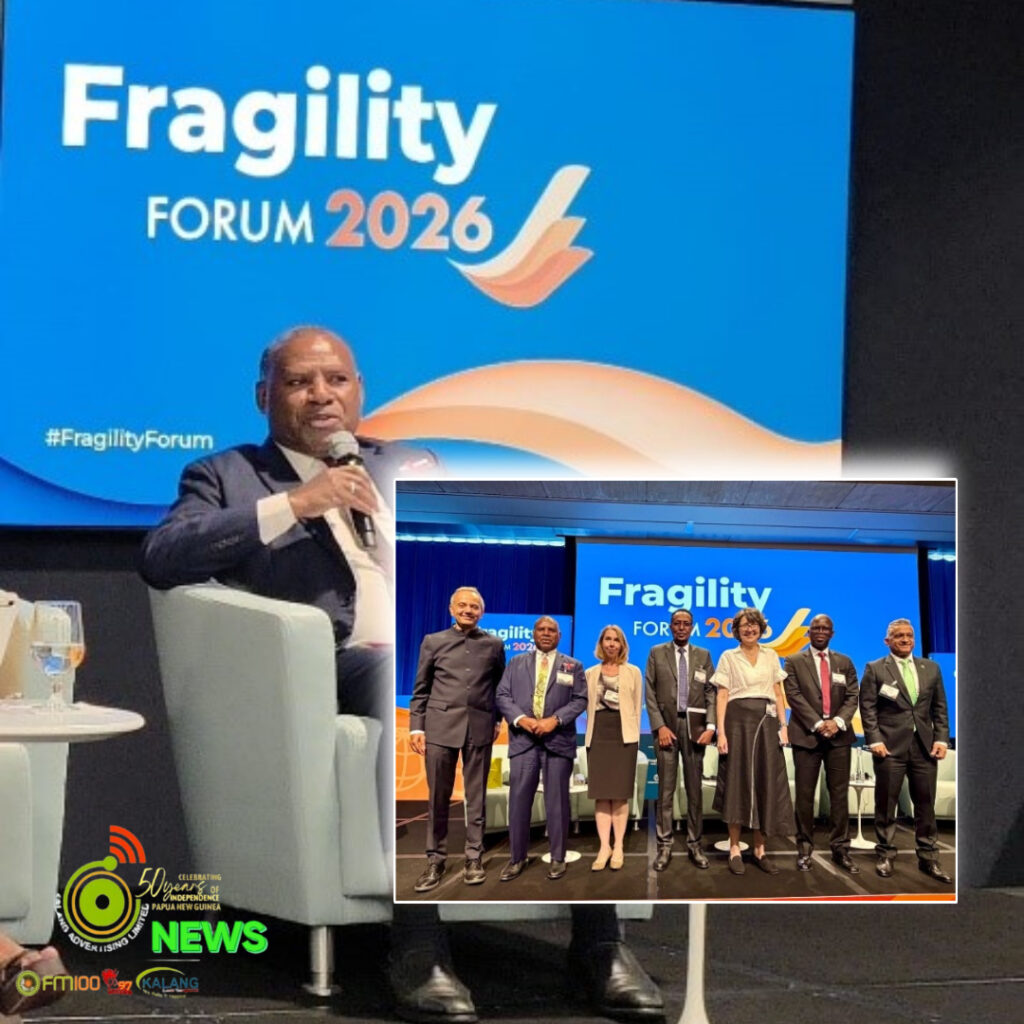
PAPUA NEW GUINEA Law and Justice frameworks and Reforms are now taking centre-stage in one of the important Forums, currently underway in the Washington DC in the United State of America.
Secretary for the Department of Justice & Attorney-General Dr. Eric Kwa has made his presentation at the World Bank Group 2026 Fragility Forum earlier this week, further elaborating and highlighting major reforms and frame works the country adopted to strengthen the Law and Order and to curb trans-national crimes.
PNG was invited to discuss its efforts in the Law and Justice sector at the Forum, which brings together practitioners and policymakers from around the world to exchange knowledge and experience on engaging in environments affected by fragility, conflict and violence.
Dr Kwa shared the stage with government ministers from Mozambique and Somalia, senior government representative from the United Kingdom as well as senior academics and World Bank representatives.
He highlighted that PNG’s experience has shown that reforms embedded in existing institutional architecture are far more durable than those supported through parallel mechanisms created and managed outside of government.
“We have a good story to tell and Forums like this allow us to tell our stories at the highest levels. I am learning also from the experience of countries around the world and I will take that learning back to Papua New Guinea,” Dr Kwa said.
“Working through government systems is always going to be more effective than setting up parallel mechanisms. Don’t come to us with pre-cooked ideas. Talk to us first.”
“The Government has made prevention, a strategic priority, reflected in the launch of its National Prevention Strategy in 2025 and development partners to align their own investment frameworks accordingly, shifting from a predominantly response-oriented posture to one that recognizes early intervention as both sound development policy.
“Political commitment is not a precondition for partners to assess and check, but a quality that is understood to be built and deepened through the work of reform itself.”
Dr. Kwa urged both humility and being willing to take risks and emphasized that waiting for fully formed commitment before international partners engage can, in practice, withhold the very support that allows commitment to take root.
He highlighted the Government’s National Coordinating Mechanism — which has coordinated across police, courts, and correctional services for over two decades and survived multiple political transitions — as a direct illustration of how national ownership embeds results.
Over the next few days, Dr. Kwa will continue to engage in the Forum, participating in a session on Criminal Violence, Illicit Markets, and the Challenge of Jobs and Livelihoods as well as engaging with a range of development partners with investments in PNG.
The title of the session was “Principled Pragmatism: Practical Lessons on Enabling Government Commitment Under FCV Pressures”, and it examined how government commitment had to be the foundation for reforms.