
FARMING DRIVES FOOD SECURITY & INCOME IN NORTH FLY
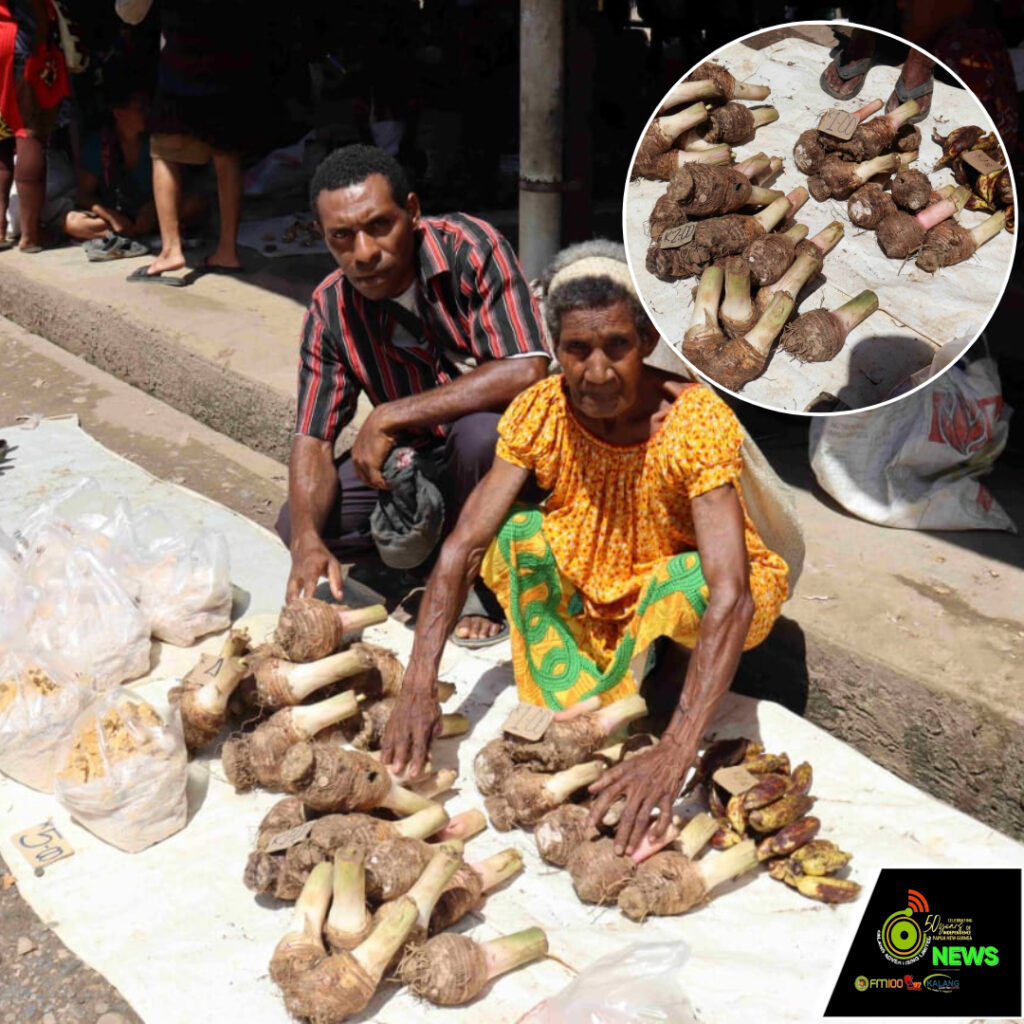
CAPTION: Local farmer Jimmy Mathew and his mum from Somoekwankia Village in North Fly District selling taro combs in Kiunga
BY KENNY ROMANUS
EFFORTS to tackle hunger and poverty are gaining ground at the community level, where families are being empowered to grow their own food and earn income.
This approach supports the United Nations Sustainable Development Goals, particularly those focused on ending poverty and hunger through increased food production, improved nutrition, and sustainable livelihoods.
In rural Papua New Guinea, limited access to cash income and a variety of food crops continues to be a challenge, making agriculture a key pathway to improving livelihoods.
A clear example is young farmer Jimmy Mathew from Somoekwankia Village in North Fly District. With support from the Ok Tedi Development Foundation’s Food Security Program, Jimmy is helping sustain his family through farming.
On March 27, he and his mother sold 69 taro combs at the Kiunga Town Market after months of work in their garden.
Jimmy said the program has greatly benefited his family. Starting with taro planting materials provided through the initiative, they cultivated 575 plants, with 69 ready for harvest.
At the market, the taro combs were sold for between K2 and K4 each. However, Jimmy highlighted transport as a major challenge, with travel costs to Kiunga reaching about K50 one way. He explained that trips to town depend on whether the expected sales can cover these expenses.
Despite these challenges, Jimmy remains optimistic, saying his family now has an additional source of income to rely on.
He noted that sago has traditionally been the main crop in North Fly, limiting opportunities to diversify income.
Through the program, farmers are now being encouraged to grow a wider range of crops including taro, bananas, cassava, and vegetables.
Jimmy expressed gratitude to the foundation for providing planting materials and technical support, saying the harvest reflects both hard work and strong partnerships.
OTDF Food Security Officer Jethro Robert said the program aims to help farmers build sustainable livelihoods beyond the life of the mine, ensuring consistent food supply and income generation.
He also stressed the importance of monitoring crops and managing pests, pointing out early signs of taro beetle infestation, which could become a serious threat if not controlled.
“Our work goes beyond supporting crop production—we also assist farmers in preventing the spread of pests like the taro borer beetle,” he said.
Acting Chief Executive Officer Andrew Mari described the Food Security Program as a vital initiative for building resilient communities across the CMCA region.
He said agriculture remains one of the most practical and sustainable ways for communities to improve food security while generating income.
Through the program, families are being equipped with the knowledge, resources, and support needed to move beyond subsistence farming.
Mr Mari added that strengthening local food production is central to the foundation’s long-term vision.
“Our goal is to see communities in Western Province become economically resilient and food secure well beyond the life of the mine. By supporting farmers and promoting crop diversification, we are creating a foundation for sustainable livelihoods for future generations,” he said.
Across Western Province, particularly in the CMCA region, the Ok Tedi Development Foundation continues to play a key role in promoting agriculture as a pathway to food security and income.
Through training, extension services, planting materials, and market support, the program is helping communities build stronger, more resilient livelihoods beyond the mining era.