KIUNGA SEC SHOWCASE HERBAL OIL AND SOAP PRODUCTION
BY KENNY ROMANUS, in Kiunga
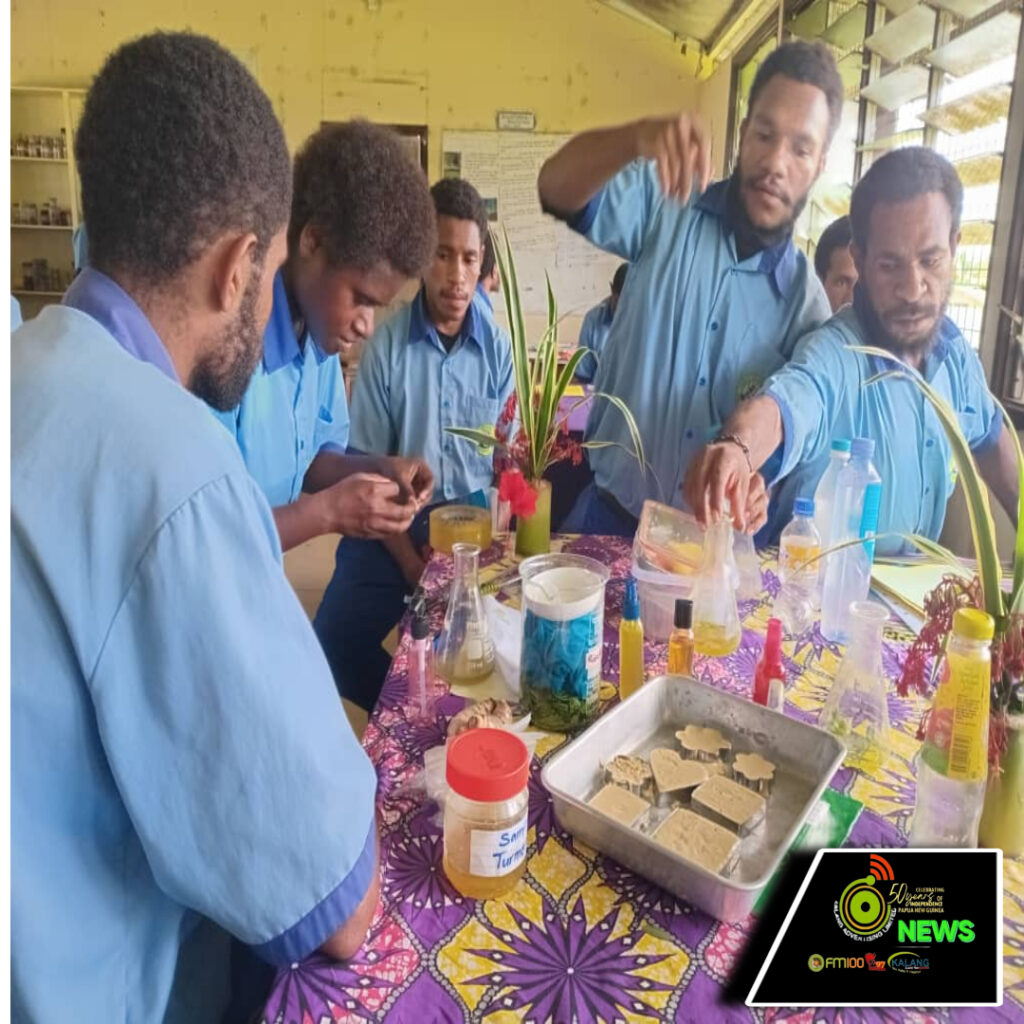
FIFTY-one students from Kiunga Secondary School in Western Province’s North Fly District recently demonstrated their practical skills by producing oils and soaps from aromatic and herbal plants during an assessment activity held last Friday.
The exercise showcased how natural resources found within local communities can be transformed into useful products that support daily living and create small income-generating opportunities.
Students used a range of aromatic and medicinal plants including avocado, neem, massoia bark, turmeric, lemon, moringa, orange, and pawpaw during the presentation.
Grade 11 students studying Biology, Chemistry, and Agriculture conducted research on the plants before processing them into different products.
Science Department Agriculture teacher Mrs Esther Noah said the project focused on aromatic plants commonly found in Kiunga and surrounding villages, with students tasked to identify suitable plants and produce oils and soaps from them.
According to Mrs Noah, the activity demonstrated the students’ ability to apply their classroom knowledge and practical skills while showing that people in Western Province can use herbal plants for small-scale business ventures.
She said the project also equips students with important life skills that they can continue using after completing school, whether they pursue higher education or return home to their communities.
Mrs Noah further explained that the products developed by students can provide several health and beauty benefits, including skincare, hair care, and body care applications.
She added that the implementation of the Standards-Based Curriculum (SBC) has helped students improve in both academic theory and practical learning experiences.
Science Head of Department Mr Sammy Jonne praised both teachers and students for the successful project, saying such activities help students build confidence and professional skills for the future.
He said students can use the knowledge gained to start small businesses using herbal and aromatic plants available in their villages while also sharing their skills with community members.
Mr Jonne revealed that the assessment activity was first introduced in 2025 and this year marked the second presentation during Term Two, with the Science Department planning to continue similar projects in the future.
He encouraged students to take their education seriously and become productive citizens who can contribute meaningfully to the development of their communities, province, and the country.
Mr Jonne also noted that the activity encourages teachers to adopt innovative teaching methods that allow students to gain practical skills across various subject areas.
Kiunga Secondary School continues to promote Science, Technology, Engineering, and Mathematics (STEM) learning approaches under the SBC system, with the Science Department actively involving students in STEM-related practical activities.
Community members in Western Province are also encouraged to explore similar initiatives using aromatic and herbal plants available in their local areas to produce value-added plant products.