FARMERS URGED TO PLANT CLIMATE RESILIENT CROPS AS EL NINO LOOMS
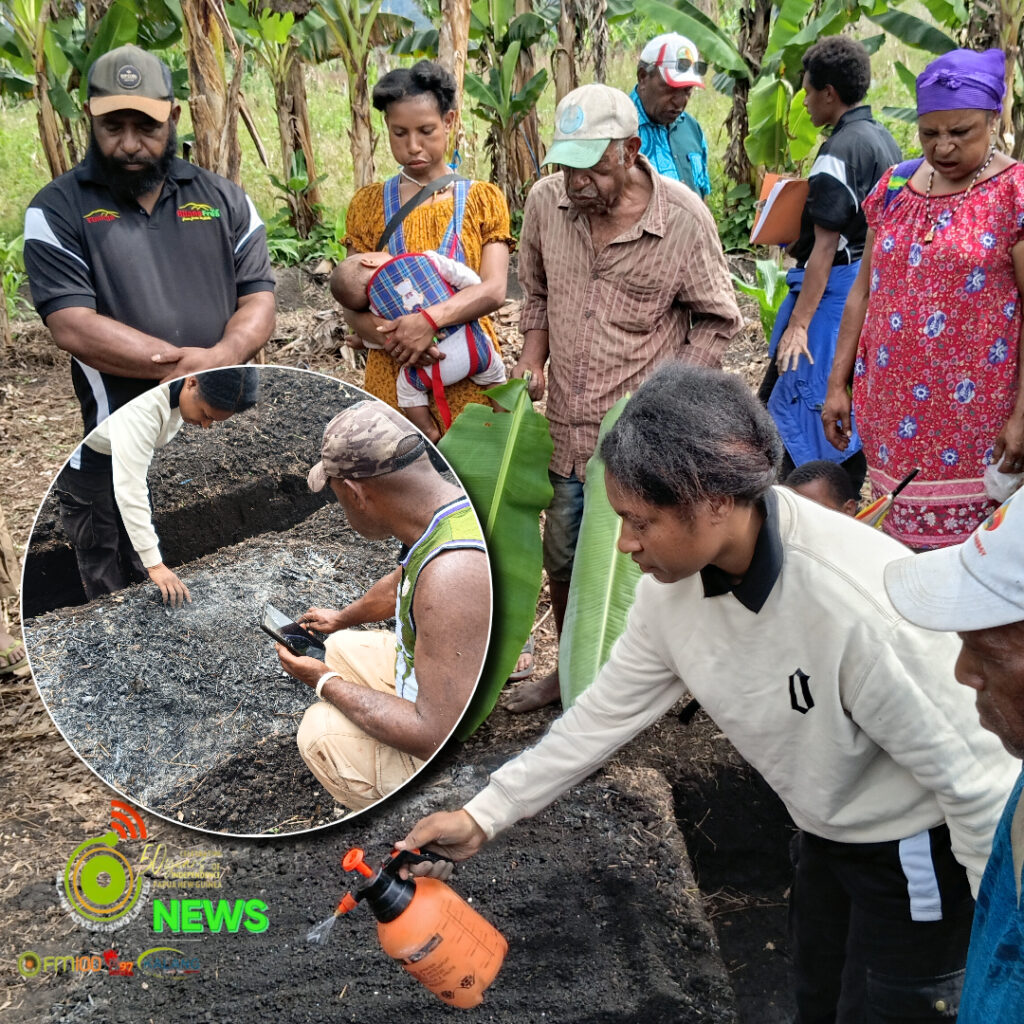
CAPTION: Highlands Fresh representatives demonstrating to lead farmers farming practices.
A team from the Highlands Fresh are visiting partner lead farmers around Western Highlands and Jiwaka Province to conduct awareness on the severe dry season or El Nino in the country.
Team leader and Manager of Highlands Fresh, Karl Kunjil warned farmers at Warawau in the Anglimp district on the border of Western Highlands to seriously consider the dry season and plant climate resilient crops like casava, African yams and certain varieties of sweet potato (kaukau).
Kunjil further urged the farmers to be resilient and do irrigation or do farming close to the river for easy access to water to watering their crops.
The team challenged the farmers not to give up farming during this dry season because the province and country will depend on the farmers for fresh produce during this severe dry season. This means you will make more income during this El Nino season.
Highlands Fresh team also conducted a bulb onion training for the farmers to plant bulb onion and supply to Highlands Fresh.
With the prolonged dry season in the highlands, most of the gravelled roads are becoming dusty, unsealed roads are becoming worse cause of dust and air pollution, affecting commuters and roadside people.
Similar situation is faced in Mendi town and other parts of highlands provinces where the roads are not sealed.
With El Nino predicted by Weather experts to get worse for the country, threats of respiratory diseases by breathing dust can not be ruled out.
Meantime, the Livestock Development Corporation is lso preparing contingency plans for a possible El Niño, outlining how it will respond if extreme weather disrupts operations, projects or services.
LDC says a dedicated team will be nominated to lead the planning and develop response strategies for the climate event.
The corporation will advise stakeholders once the team is formed and the plans are finalised.
El Niño typically brings drier conditions and heat stress to PNG, which can affect livestock feed, water supplies and animal health.